
Core Construction Drawing Set Explained
Architectural drawings
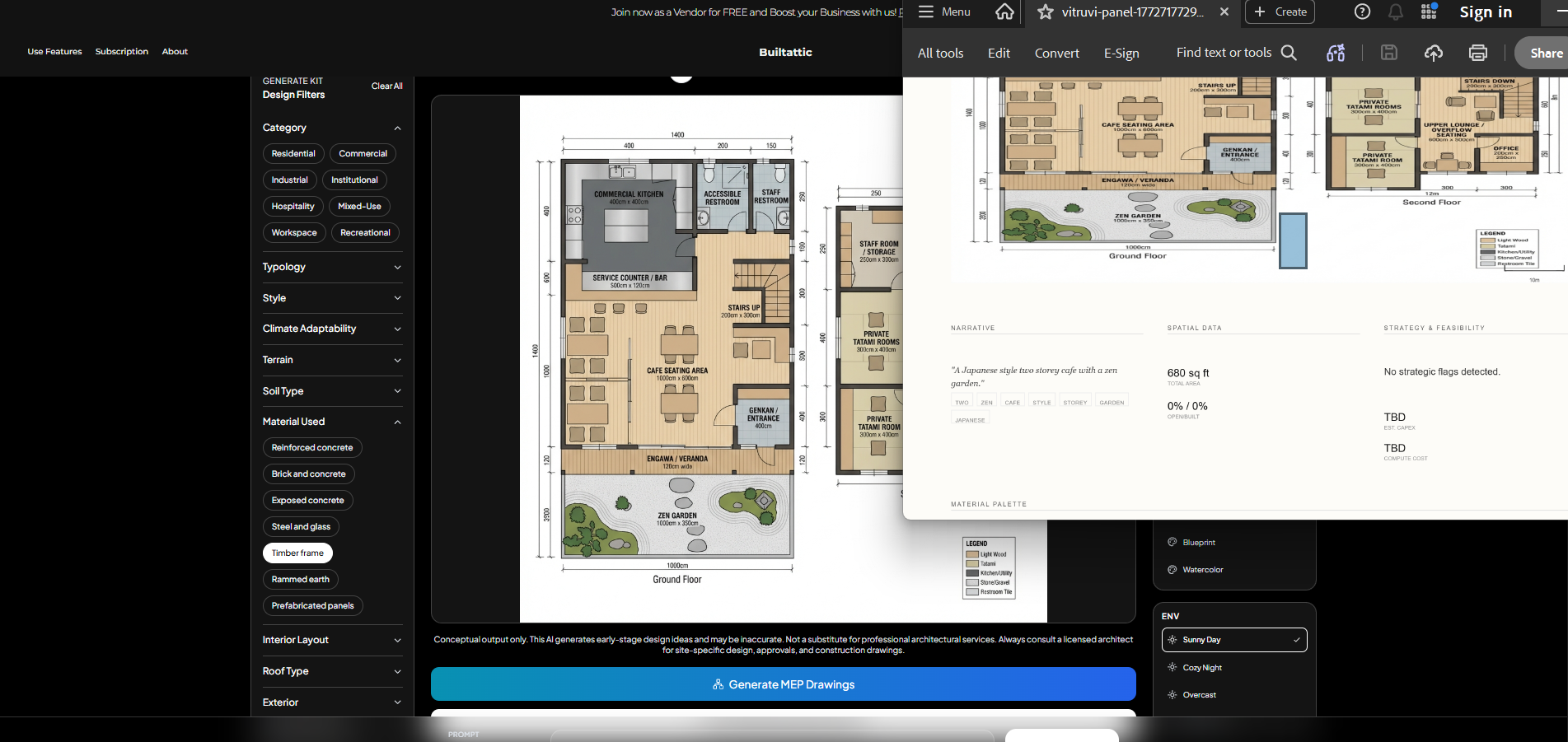
Architectural drawings form the foundation of any construction drawing set. These typically include floor plans, elevations, building sections, reflected ceiling plans, schedules, and detailed construction details. Together, they define spatial layout, material intent, circulation logic, and functional relationships within the building.
Contractors rely on architectural drawings to understand how spaces are organized, how components connect, and what the finished environment is expected to achieve in terms of usability, safety, and design intent.
Structural, MEP, and site drawings
Structural drawings define load paths, framing systems, foundations, and structural connections. MEP drawings describe mechanical systems, electrical distribution, plumbing layouts, fire protection, and coordination zones. Site and civil drawings address grading, drainage, access, utilities, and external infrastructure.
When properly coordinated, these drawings form a complete construction document package that allows contractors to price accurately, sequence work efficiently, and reduce on-site conflicts and RFIs.
Why completeness matters in construction documentation
Incomplete or poorly coordinated drawing sets increase risk during permitting, procurement, and construction. Missing information leads to assumptions, delays approvals, and often results in costly rework on site. Builtattic supports teams by standardizing documentation workflows and keeping requirements, revisions, and responsibilities visible across all stakeholders.
Coordination, Compliance, and Revision Control
Why coordination reduces change orders
Many construction delays stem not from missing drawings, but from misalignment between architectural, structural, and MEP documents. Conflicting layouts, unsynchronized revisions, or unclear ownership can trigger change orders, site confusion, and schedule overruns.
Strong coordination practices ensure that updates in one discipline are reflected consistently across the entire drawing set before construction begins.
Compliance documentation is always project-specific
Permit and compliance requirements vary by country, region, building type, and delivery method. There is no universal drawing checklist that fits every project. Teams need a documented process for code checks, consultant inputs, authority submissions, and revision approvals.
Builtattic helps centralize these moving parts so drawing control remains predictable even as project complexity increases.
SEO-Focused FAQ: Construction Drawings
Are floor plans alone enough for construction permits?
In most jurisdictions, no. Floor plans are only one component of a construction drawing set. Permits typically require coordinated architectural, structural, MEP, and site drawings, with the level of detail varying by authority and scope.
What are the minimum drawings needed for a small construction project?
Even small projects usually require architectural plans and relevant engineering documentation. The minimum set depends on local regulations, occupancy type, and construction complexity, but coordination remains essential at all scales.
How do teams reduce drawing conflicts before construction starts?
Teams reduce conflicts through structured coordination reviews, synchronized revision cycles, and clearly assigned drawing ownership across disciplines. Builtattic supports this by creating a single source of truth for updates and approvals.
How does Builtattic improve construction drawing workflows?
Builtattic helps teams standardize documentation requirements, track revisions across disciplines, and coordinate construction drawings in one operational layer. This improves clarity for designers, consultants, contractors, and project managers while reducing avoidable rework.